Currently Working in the capacity of Regional Team Lead - Information Management in one of the Major Solution Integrator (Future Technology Systems Company).
Over the last 15 years I develop my skills in design, implementation and streamlining of operations of IT solutions with enhanced efficiency. Some of my responsibilities are, to design, implement, document and maintain system configurations, migrate and integrate complex systems.
As all we know VMWare has release the VSphere 7.0. In this article I will show how to upgrade VCenter Appliance 6.7 to 7.0.
Download VCenter Server Appliance from VMware Website. And mount the ISO. Browse to vcsa-ui-installer on Mounted Media and run installer.exe
Note: Before starting the upgrade, make sure DNS record and NTP is working fine. VCenter Appliance upgrade process will deploy the new VCenter appliance and copy the configuration and data from old appliance to newly deployed appliance. This means temporary you should the enough resources to accommodate the new VM.
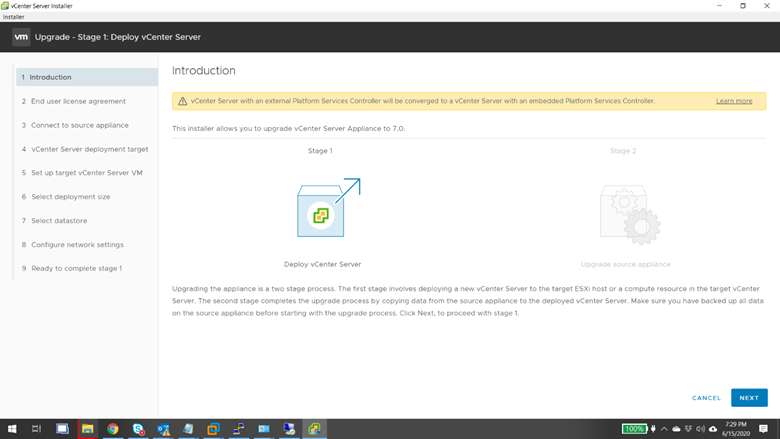
Click Upgrade to start the Wizard.
Click Next to continue
Accept the license agreement and click Next
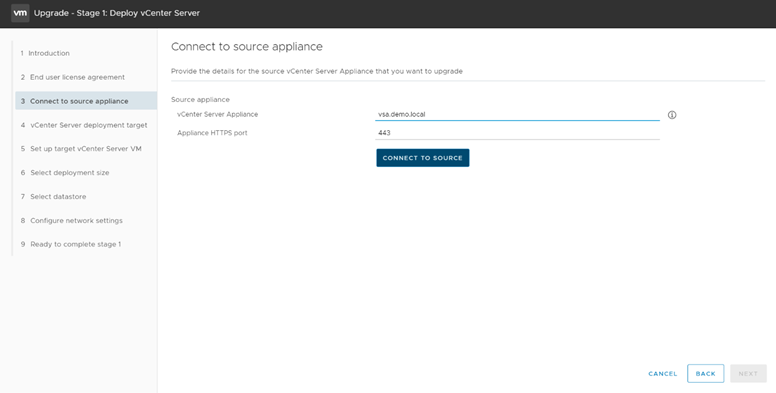
Connect the VCenter appliance
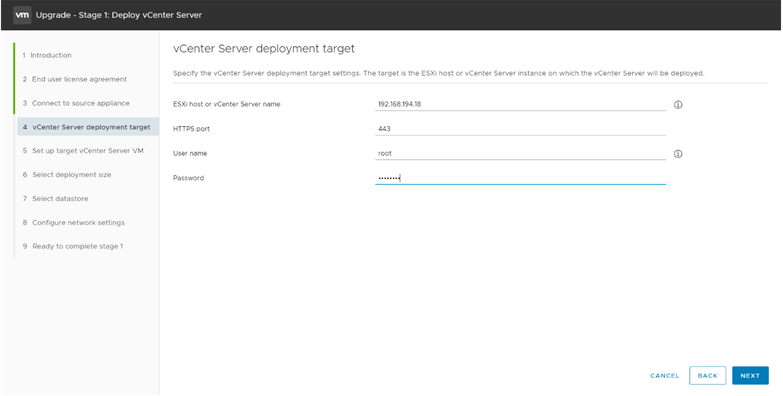
Provide the ESXi Server where you want to deploy the new VCenter VM.
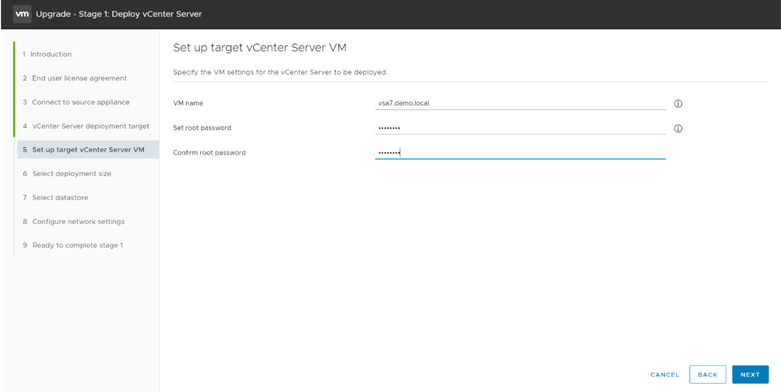
Provide the New VCenter VM name & provide the appliance Root Password.
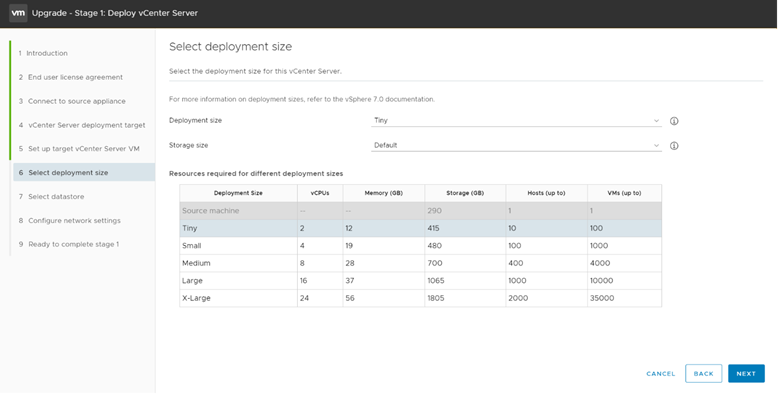
Select deployment size and click next.
Select the datastore, incase if you want to save the disk as thin format select enable thin disk mode.
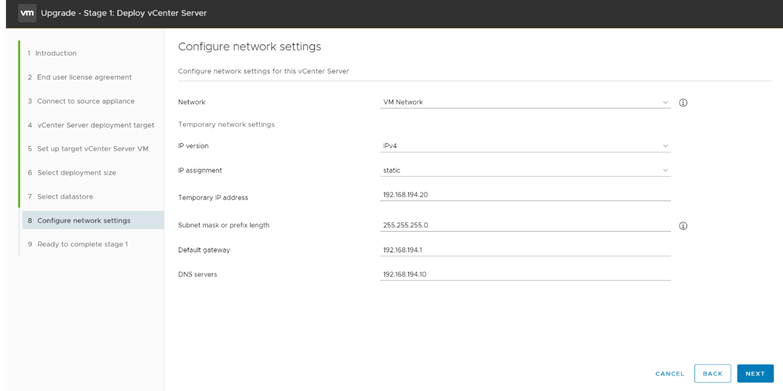
Provide the network information and temporary IP.
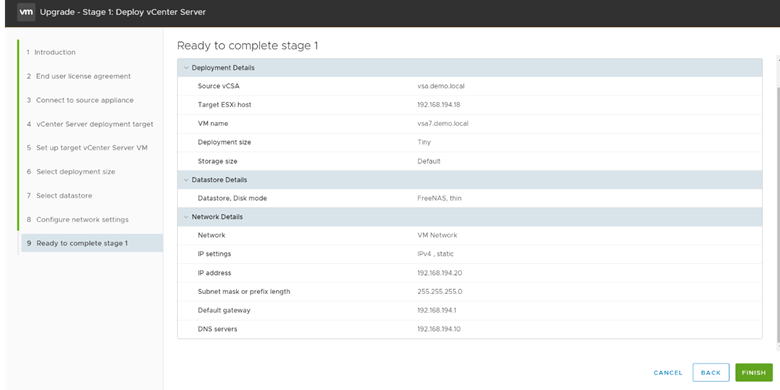
Review the configuration and click Finish to start the deployment.
image011 1
image012 1
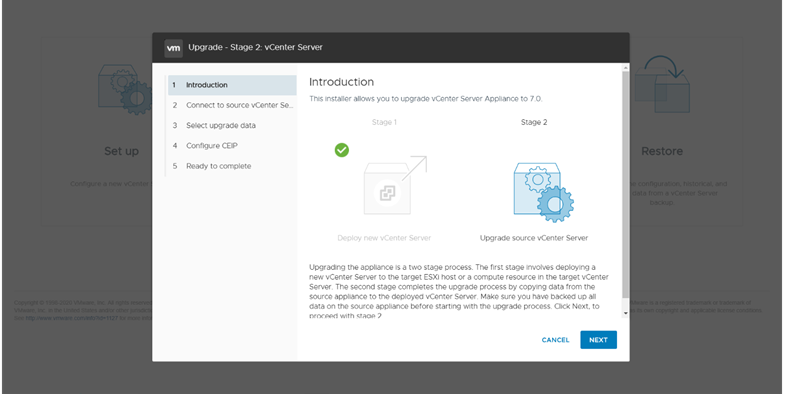
In this Stage VM is already deployed, once deployment finished you can continue to start the Stage 2. In stage 2, VM will copy the data from old appliance and configure the new appliance. Click Continue
Click the next to start the wizard.
image014 1
image015 1
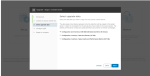
Select the upgrade data and click next.
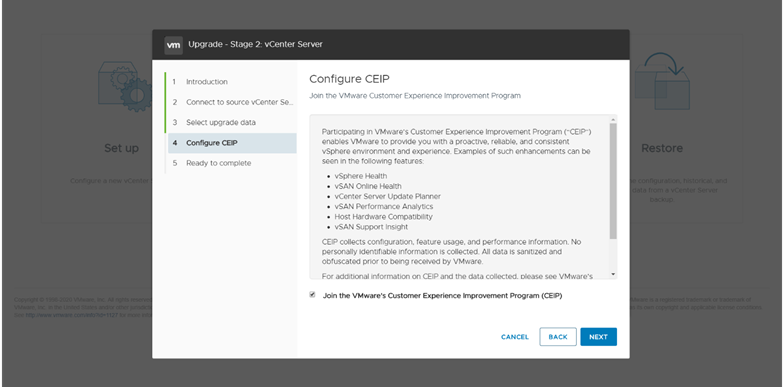
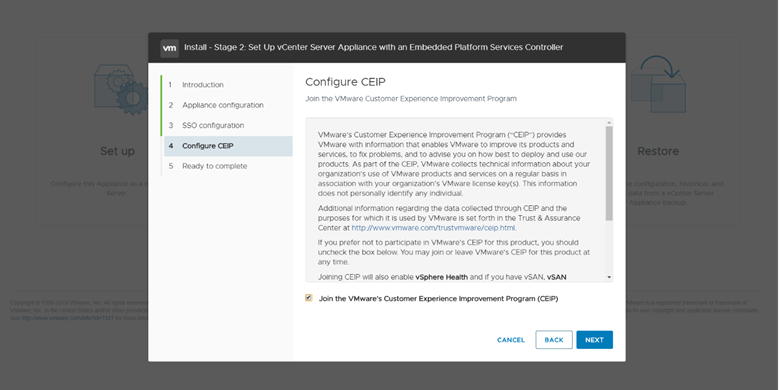
Select the desire CEP option and click next.
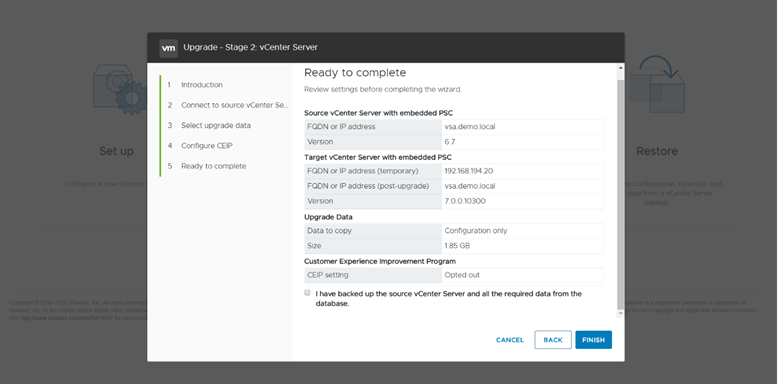
Review the configuration and click Finish to start the process.
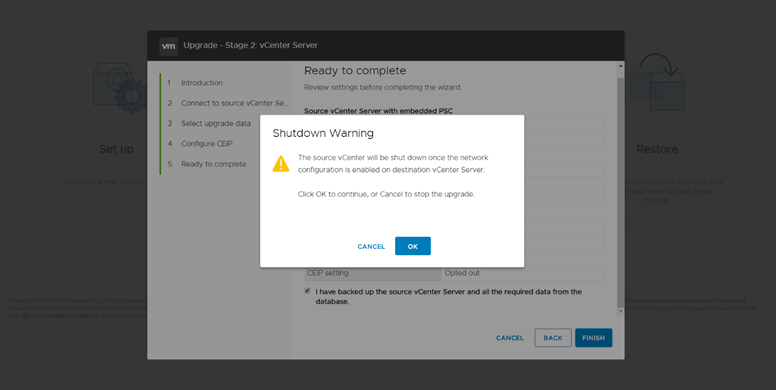
Accept the Warning, saying source VM will be shut down when new VM get the network configuration.
image019 1
image020 1
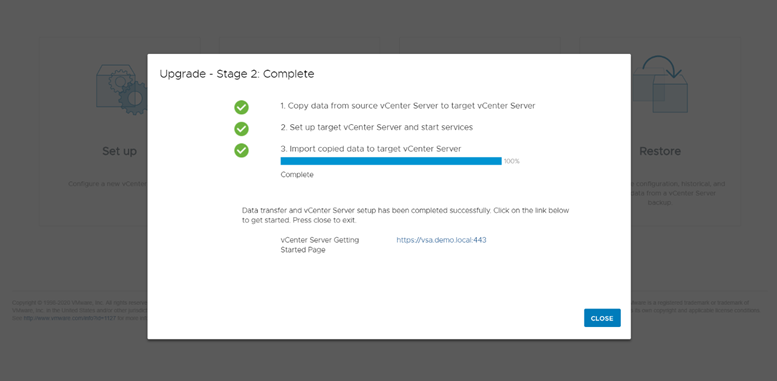
Whole process takes approx. 15-20 Min to finished.
Upgrade finished, Click Close to close the installation wizard.
VCenter is upgraded. You can access the VCenter appliance
vCenter Server is the centralized management utility for VMware, and is used to manage virtual machines, multiple ESXi hosts, and all dependent components from a single centralized location. VMware vMotion and svMotion require the use of vCenter and ESXi hosts.
In this article, I will show Step by Step instruction how to deploy VMWare VCenter Server Appliance.
VCenter Server Appliance Requirements:
Resource
Requirement
Disk storage on the host machine
Embedded Platform Services Controller:
Tiny: 120GB
Small: 150GB
Medium: 300GB
Large: 450GB
vCenter Server Appliance with an External Platform Services Controller:
Tiny: 86GB
Small: 108GB
Medium: 220GB
Large: 280GB
External Platform Services Controller Appliance:
Tiny: 30GB
Small: 30GB
Medium: 30GB
Large: 30GB
Memory in the vCenter Server Appliance
Platform Services Controller Only: 2GB Ram
All components on one Appliance.
Tiny: 8GB RAM
Small: 16GB RAM
Medium: 24GB RAM
Large: 32GB RAM
CPUs in the vCenter Server Appliance
Platform Services Controller Only: 2 CPUs
All components on one Appliance.
Tiny: 2 CPUs
Small: 4 CPUs
Medium: 8 CPUs
Large: 16 CPUs
Notes:
Tiny Environment (up to 10 Hosts, 100 Virtual Machines)
Small Environment (up to 100 Hosts, 1,000 Virtual Machines)
Medium Environment (up to 400 Hosts, 4,000 Virtual Machines)
Large Environment (up to 1,000 Hosts, 10,000 Virtual Machines)
Download VCenter Server Appliance from VMware Website. And mount the ISO. Browse to vcsa-ui-installer on Mounted Media and run installer.exe
Note: Before starting the installed, make sure to create the DNS A-Record for the VCenter Server along with reverse pointer for the same.
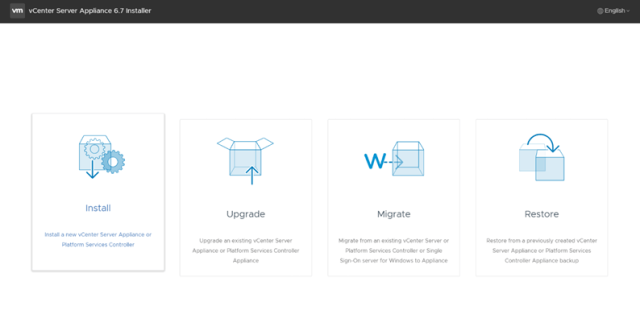
Click Install to start the Installation Wizward.
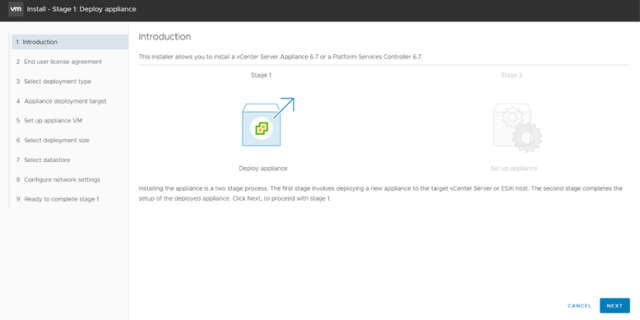
Click Next start the Appliance Deploy.
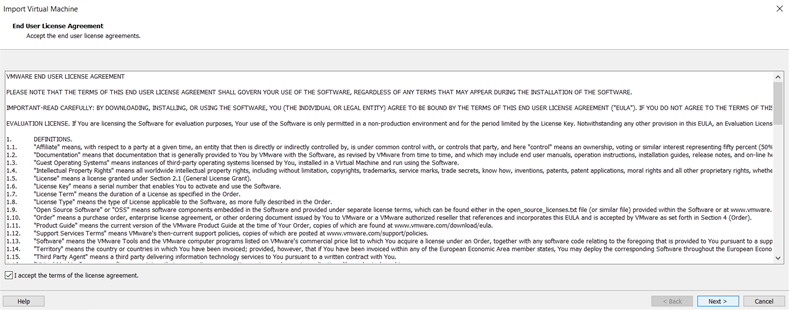
Accept License Agreement and click next
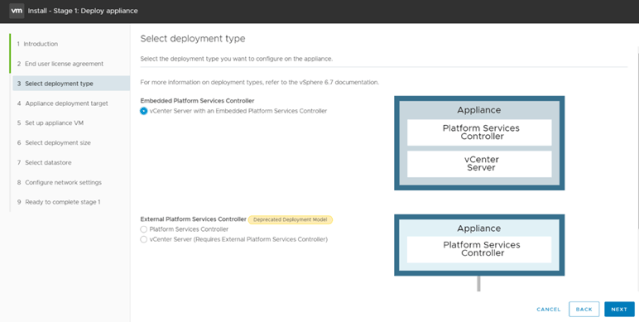
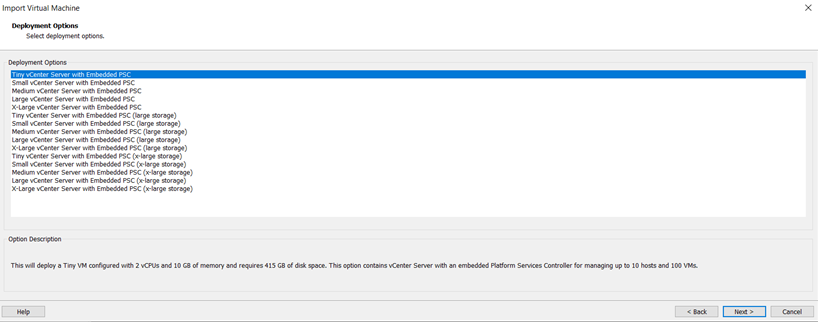
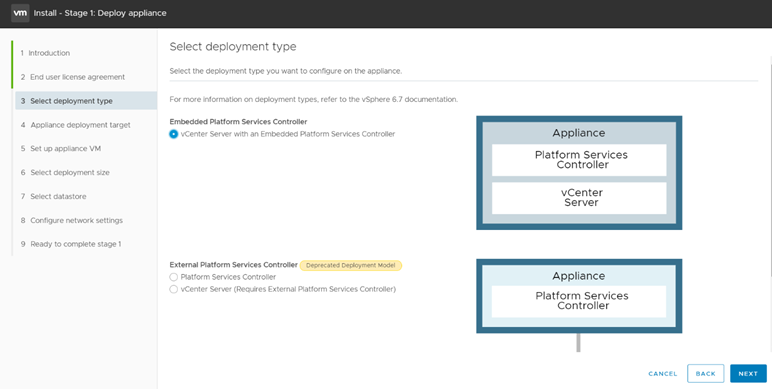
Select the Desire deployment type and click Next. I am proceeding with Embedded Platform in this article.
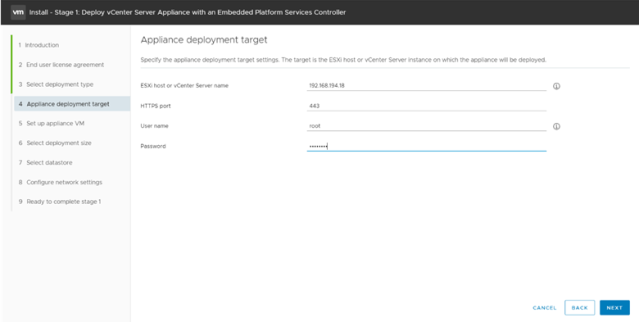
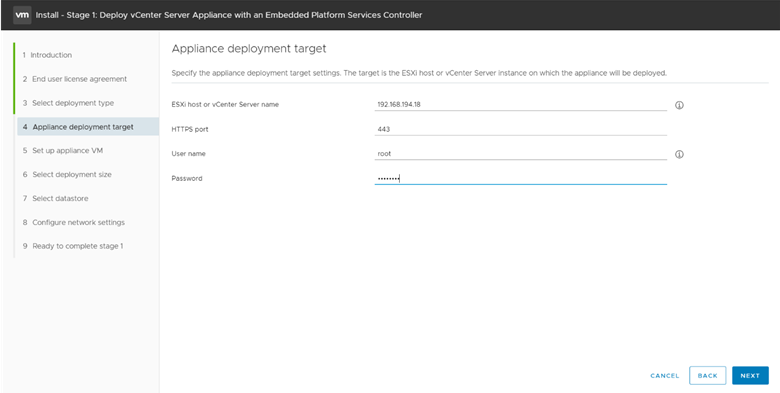
Provide the ESXI or VCenter Server information where you want to deploy the VCenter Appliance. And check ok.
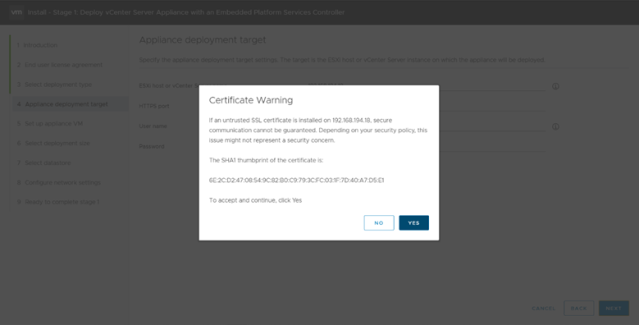
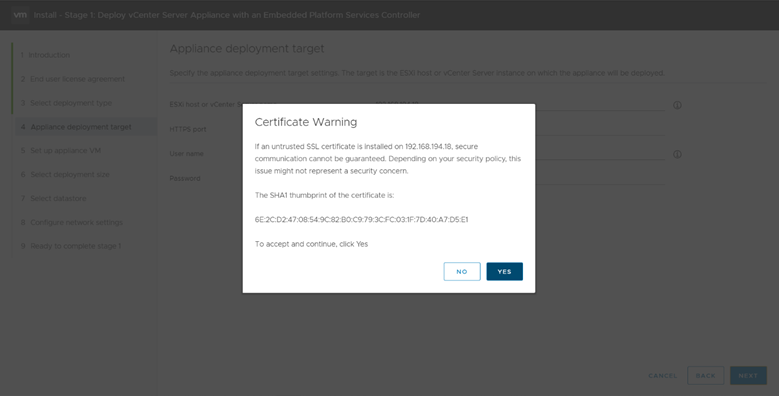
Accept the ESX Server Certificate Warning.
ESXI is connected Click Next.
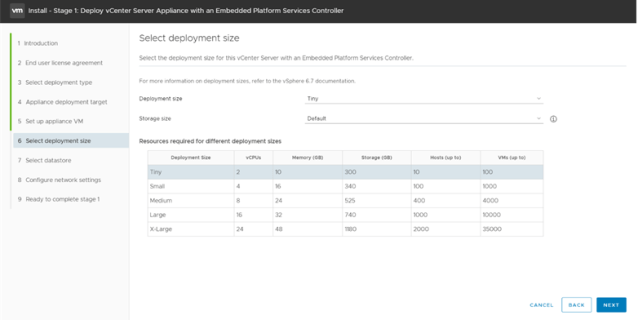
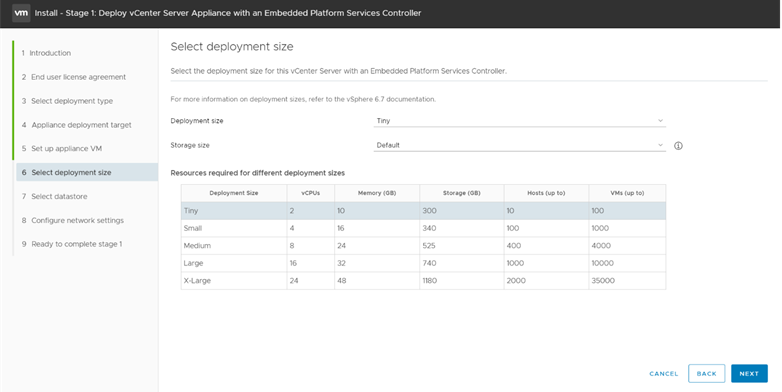
Based on the requirements select the deployment size, and storage size.
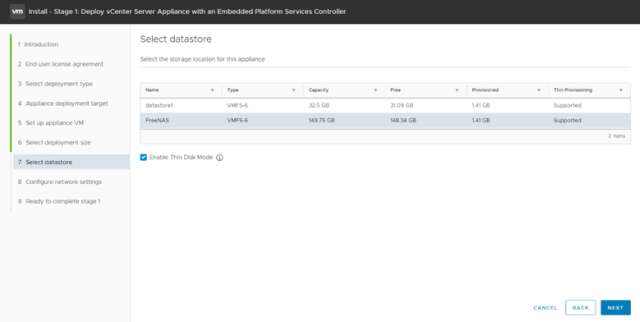
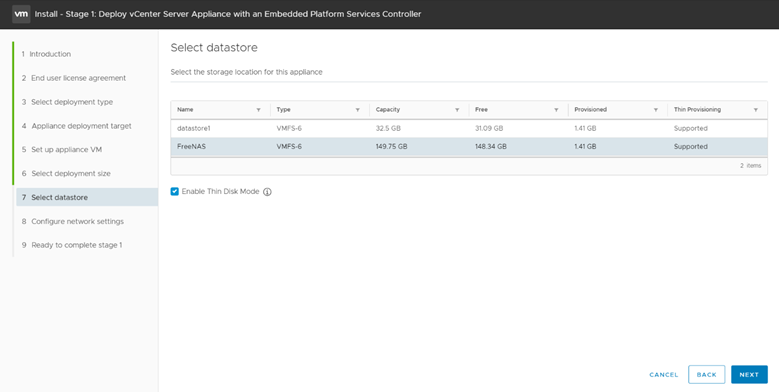
Select the datastore where you want to save the Appliance. Incase if you want to deploy the appliance in Thin Disk Mode, select the option “Enable Thin Disk Mode”
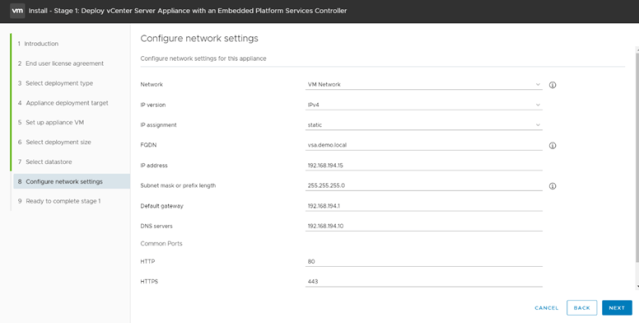
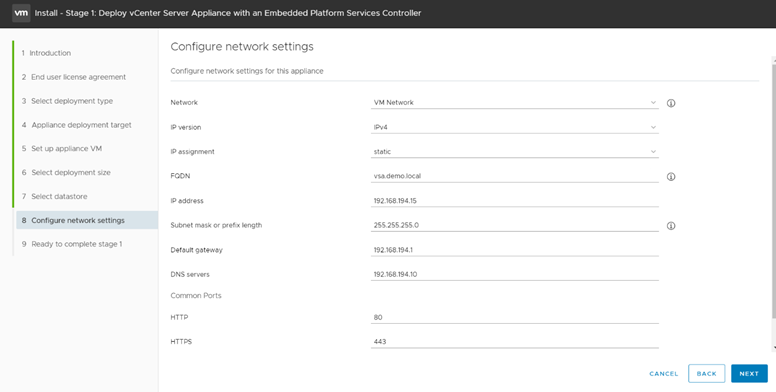
Provide the Network information, like VM IP hostname etc. Make sure before proceed next create the DNS Entries.
image011
image012
Click Finish to start the Appliance VM deployment.
image013
image014
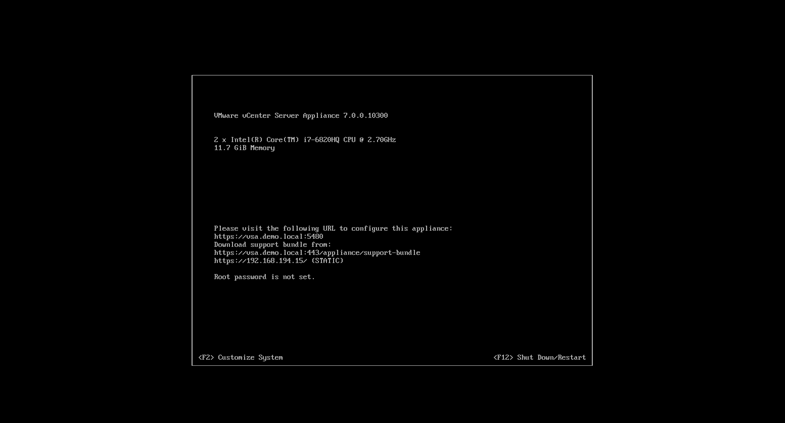
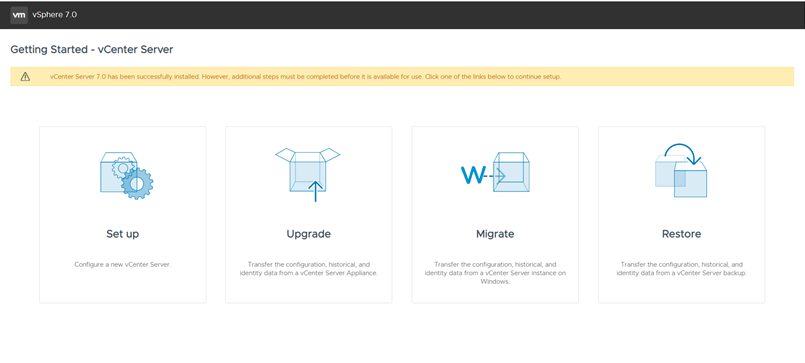
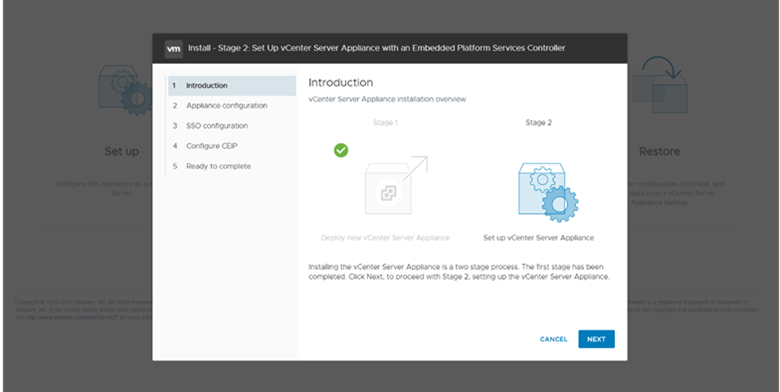
Once VM Deployment finished, Stage 1 of VCenter Appliance got finished. Click Continue to start the Stage 2 of deployment.
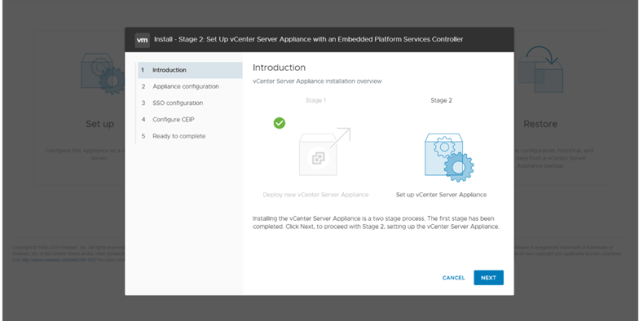
Click Next start the Stage 2
Provide the NTP information, Enable SSH Access incase if you want to configure VCenter Sever HA.
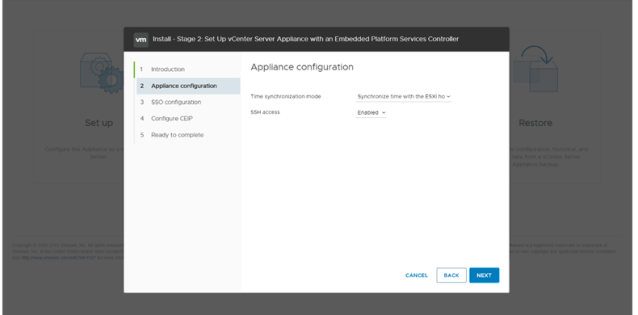
As I am planning to configure VCenter HA, hence enabling SSH Access. Click Next to continue.
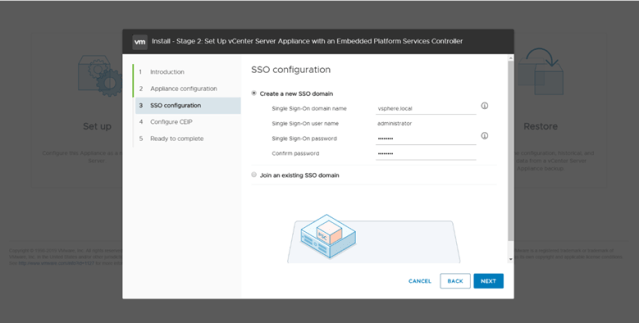
Select the desire SSO Configuration, as I am going to setup the new SSO Domain. So I am providing the SSO domain name & Password for the Administrator. Click Next to continue.
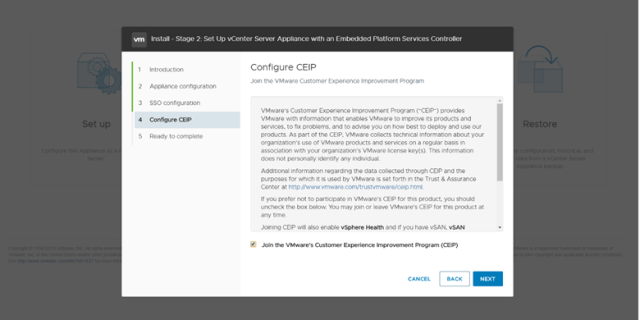
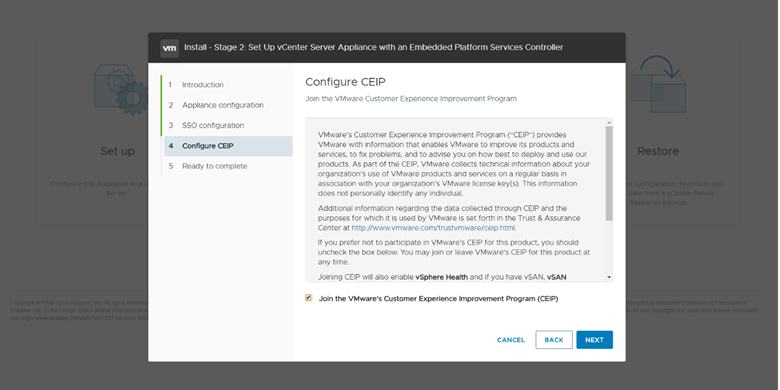
Select the CEP option you desire and click next.
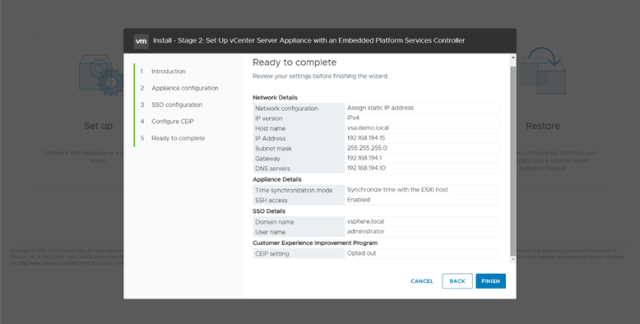
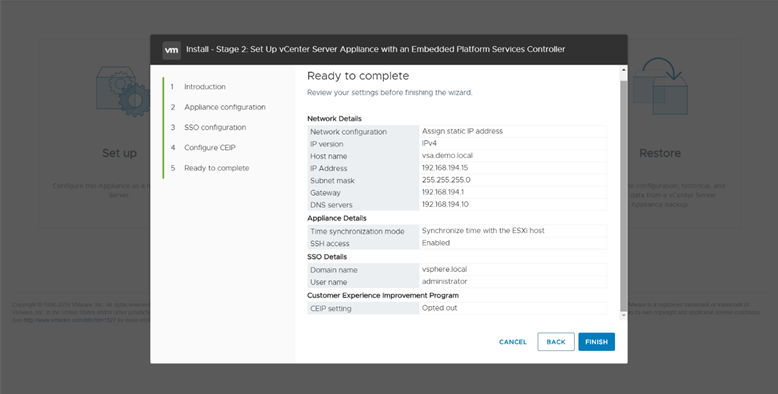
Confirm the Summary information and click finish to start the STAGE 2 Configuration. Please note that once you click Next you can’t stop the process.
image021
image022
Process will take upto 10-15 mins to finish the deployment.
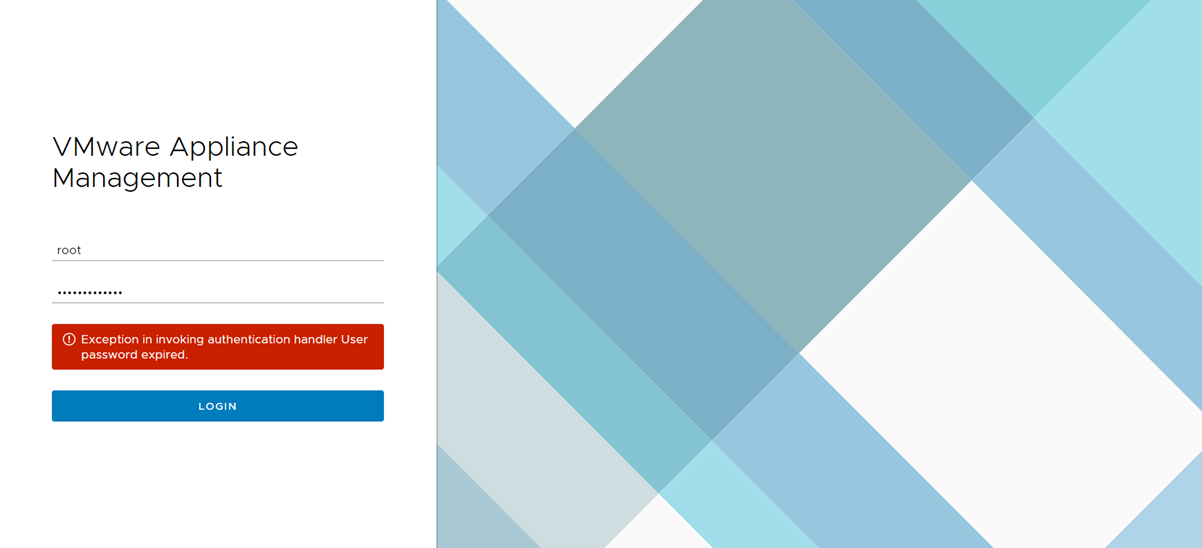
I tried to login to VCenter Appliance Web interface after very long time, and notice unable to login on appliance and below error.
The quick fix for the error is log in to Appliance Console/SSH and goes to Shell and run the passwd command and provide the new password, then repeat the new password. Once password updated. You can login to web console.
I faced the strange issues with one of my customer, where Exchange Database was not getting list in GUI, as well as when I try to list the Databases using Exchange Management Shell I got the error saying unable to find “Mailbox XXXXX “ DB.
image011
image012
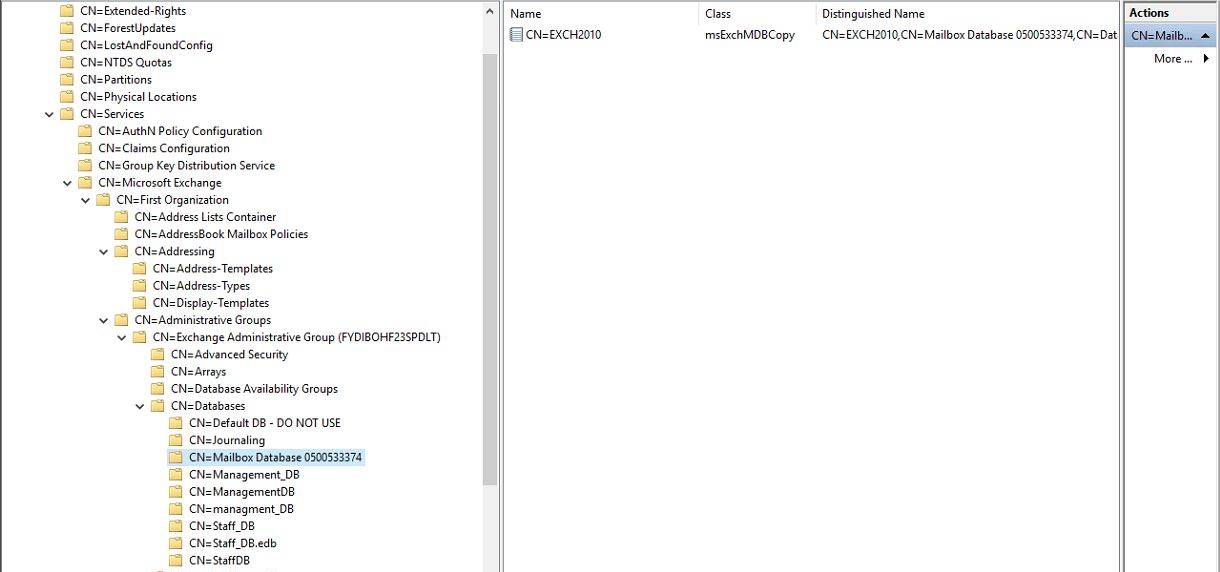
After seen this error, I opened ADSI Edit and found someone didn’t decommission the old Exchange properly. Old Exchange Sever was removed and Old Databases still exists in Active Directory Schema. After identify this , I just clean-up the old Database entries and do a refresh on ECP all databases got list immediately.
Login to domain controller with administrative account.
Navigate to Start –> Run –> ADSIEdit.msc and hit enter
Click on Action –> Connect to –> Select Configuration under “Select a well known naming Context:”
Navigate to CN=Configuration, DC=DOMAINNAME, DC=COM
Replace DC=DOMAINNAME, DC=COM with your domain name
Expand the CN=Services –> CN=Microsoft Exchange
After Removing the all old DBs, my current DBs started getting listed in Exchange GUI & Management Shell.
image014
image015
Note: I would recommend always use proper methods to old exchange servers, use adsi edit only incase Exchange server is no more in the environment or its got crashed. Improper use of ADSI edit may harm the active directory schema, so be very careful while modifying/deleting any values /keys.
Yesterday, I had initiated the AHV host restart task after reaching to 24% task got stuck, I wait for 1 hour but task didn’t move seems it’s got stuck. I tried to get the list using:
acli task.list
but didn’t get anything related to my task i am looking for, Finally found the solution using Egron Task manager Service. Nutanix Egron is the task manager that is responsible to start / kill the running, stuck task automatically or manually if needed.
Below are the steps to kill the running/stuck tasks.
hopes this works incase if the TASK are not getting listed using acli / progress_monitor_cli
Attention: Above mention commands are irreversible, use it carefully if you are not confident better open the support case with Nutanix Support / local Nutanix Partner.
Just got a feedback from Nutanix Support Team, above mentioned taskkill can leads to serious issues please do not do it yourself, incase if any assistance is required please reach-out to Nutanix Support for the fix.
Issue: Nutanix Prism Element Responding Very slow or not responding properly
Solution: I have encountered the prism each operation like VM Clone, VM update, VM Snapshot operation taking very long time or just waiting for menu to open. I have fixed the issue after restarting the Prism Service. Below is the solution to restart Prism Service
As all we know Nutanix Move is the great tool to migration Workload from Hyper-V, VMware and AWS to Nutanix AHV. Recently during one of migration project I faced once issue, One of the Migration Job stuck and I tried to abort the job from GUI but unable to do that. Below is the solution which I tried and its works.
login to Nutanix MOVE VM from Console/SSH
User: admin
Password: Default password (Nutanix/4u)
Type RS and enter
Now you have Elevated access on OS like a Root User. Connect to POSTGree database
STEP 1:Open Postgres-shell
Postgres-shell
psql -d datamover
STEP 2: List available Migration Plan with using below command
select mpuuid,name from migrationplans;
Step 2: locate the migratoinplan and the run below last command to delete the migrationplans (Replace ID with desire migration mpuuid you get from Step 2)
delete from migrationplans where mpuuid=’ID’;
Hopes its work
Attention: Above mention commands are irreversible, use it carefully if you are not confident better open the support case with Nutanix Support / local Nutanix Partner.
The Image service allows us to import Disk Images & ISO or disk type supported in Hyper-V & VMware directly in AHV Virtualization Management. Some of the supported formats are .qcow2, vmdk, VHD, raw, vdi, iso.
We can import the disk images directly using prism UI from Http / NFS Source.
Prism à Gear Icon à Image Configuration
So the imported images will be available in repository for future use. Any prism user with permission can spin up the VM based on available images in images repository.
Note: Before importing Images to AHV, install VertiO to avoid VM boot failures.
Why we required Images:
We can use disk images as temple, like install OS with latest patch and import it in Image service for future Use. Next time we can directly add bootable disk to newly create VM.
Attach data disk to other VM
Create Image using existing vmdisk Attached to VM:
To create the Image using existing vmdisk, we have to use acli. Login to any CVM using SSH.
vmdisk UUID: vmdisk UUID you found using vm.get command
Target Container: Where you want to create new Image
Create vmdisk using available Images in Image Configuration:
Use Prism GUI > VM >Create new VM/Update existing VM. While adding disk, select “Clone from Image Service” and select the desire image and add the image as disk.
Nutanix Xi Frame Desktop as A Service Platform Build for Cloud Deployments, having integration ith Azure, AWA, GOOGLE Cloud. But we can deploy Frame on-Prem on Nutanix AHV. In this Series I show the Nutanix Xi Frame Deployment on on-Prem Nutanix AHV.
Requirements:
Nutanix Cluster Running with Acropolis Hypervisor with Prism Central 5.10 or newer
Frame Agent and Cloud Connector Appliance (Download from here) Cloud Connector Appliance can be downloaded automatically during deployment also
Xi Frame Subscription
STEPS:
Create Golden Image
Prepare Nutanix Cluster
Connect to Xi Frame
Create Golden Image:
Now I will Install windows 10 & install Frame agent on it and then Sysprep the image.
Create VM on AHV:
Open Prim Element & Navigate to VM
Click Create VM to Create Virtual Machine
Assign VM Name, VCPU, RAM, Storage, Network and mount Windows 10 ISO , VertIO
Note: VertIO Is required to Install Window on AHV Hypervisor as Window 10 does have Nutanix ISCSI pass through Drivers
Click Save to Create the VM.
Power-On the Created VM.
Click Install to Proceed with installation
Click Install Now
Select Desire Language and keyboard options and Click Next
Select Operating System Version and Click Next
Accept the Agreement and Click Next
As Disk is not discovered, click load driver.
image007
image008
Browse Nutanix VertiIO ISO & Select the Driver as per Operating System Type. And click Ok
Select Nutanix VertiO SCSI Pass-through Controller and click next
Create Partition and click next to proceed with Windows Installation.
image011
image012
Once Windows Installation completed. Install VertiO Drivers.
Browse Mounted VertIO ISO and Run Setup.
image013
image014
image015
Click Finish
Enable Remote Desktop and RDP to Virtual Machine for Frame Agent Installation.
Note: RDP to VM is requried, as once you install Frame Agent, VNC Console connection will be disconnected
Copy Downloaded Frame Agent Installer to Virtual machines and Run it.
image016
image017
image018
Click Restart to Restart the VM.
Once You done with Image configration, run the below Command from PowerShell as Administator
Virtual machine will be powered-off once Sysprep done.
Step 2: Prepare Nutanix Cluster
Open Nutanix Prism Central, open settings
Local user Management
Create new User: with prism Central admin & user admin permission.
Save your user name and password – you will need these later on in the process.
Click on the hamburger menu icon in the upper left portion of your Prism Central interface.
Expand the “Virtual Infrastructure” menu item and select “Categories.”
Click on the “New Category” button.
Fill in the form with the following values:
Name: FrameRole
Purpose: Create and Manage Frame Instances
Values: Instance, Template, and MasterTemplate (Add each value on separate lines using the plus symbol.)
Click “Save.”
From your home drop-down menu on the left, click “Settings.”
Under the “Setup” section of the “Settings” menu, click “Connect to Frame.”
On this page, specify the following:
Select Frame Service: This is your Frame Service deployment type. Most organizations should select “Commercial” unless using a Frame GovCloud deployment.
Dedicated AHV cluster: Select the cluster where the CCA would be deployed from the drop-down menu.
Network connected to Prism Central: Specify the VLAN that will be used by this CCA from the drop-down menu.
Click “Next.” The current image for CCA will be downloaded from Nutanix portal and deployed on the Nutanix cluster specified in the previous step. The progress can be monitored in the status bar. Once complete, click “Configure.”
Connect your AHV Cluster to Frame
Connecting your AHV cluster to Frame is the final task required to get Frame running on AHV.
NOTE: DHCP Is requried otherwise wizard will be stuck on 50% stage
Access the Frame Cloud Connector wizard by navigating to the CCA’s IP. For example https://192.168.2.X.
Login with the Prism Central account you have designated for Xi Frame and enter the Prism Central URL.
Provide the Service Account(you created eariler in Pirsm Central) information and Prism Central IP Address and click Login.
Select your cluster and network VLAN to host desktops and enter your desired cloud account name.
Note: To ensure a smooth setup, please make sure you are logged into your “My Nutanix” account in a separate tab in your browser window.
Define and add the VM instance types to use for your AHV-hosted Xi Frame account.
Check the box next to your golden master image VM template for the Sandbox template.
Click on the “OS” field listed next to your Sandbox template. Select your desired operating system. Click “Next” when you’re ready.
Select the Customer entity or Organization you created earlier in the Xi Frame account setup. Click “Finish.”
The wizard should inform you that your cluster has been connected successfully.
Note: Currently Configuration changes to cloud Connector appliance after its connects to Cluster is not possible, for changes need to contact Nutanix Support.
Log in to your Xi Frame account to check the cloud account creation status. The “C” status indicates that the account is still being created.
Note: If your account status hasn’t changed after an hour, please create a ticket through your MyNutanix support portal and provide your cloud account’s display name. You can locate the cloud account’s display name by navigating to the Organization or Customer entity’s “Cloud Accounts” tab.
The account status should change from “C” (Creating) to “R” (Ready).
Once the cloud account is ready, you can use your AHV infrastructure to create an account.